Why regional value matters
When fuel prices rise sharply, the impact is not evenly shared.
Sharp fuel price rises affect households and businesses everywhere, but regional communities often have fewer ways to reduce their exposure. Longer travel distances, limited public transport, and the fuel needs of farming, freight and essential services make reliable, affordable fuel especially important outside major cities.
That means fuel resilience is not an abstract national policy question. It is a regional cost of living and economic issue.
The energy transition should respond to that reality. Regional communities already host much of Australia’s energy, mining and agricultural infrastructure. As new renewable energy and green fuels projects are developed, the question should not only be where they can be built. It should also be how the communities hosting them can share in the value.
Social licence cannot be assumed
Renewable energy projects are often proposed for regional areas because that is where the land, wind, solar resources and network opportunities are found. Yet many projects have struggled to earn community support.
Some opposition is driven by organised misinformation. Some reflects legitimate concerns about land use, environmental effects, local amenity, infrastructure pressure and whether benefits will flow elsewhere. Treating every concern as misinformation is as unhelpful as allowing false claims to go unanswered.
The practical response is to build trust early. Communities need clear information, genuine opportunities to influence project design and confidence that commitments will be kept. Engagement that begins after the important decisions have already been made is unlikely to earn durable support.
A green fuels project has an ongoing regional footprint
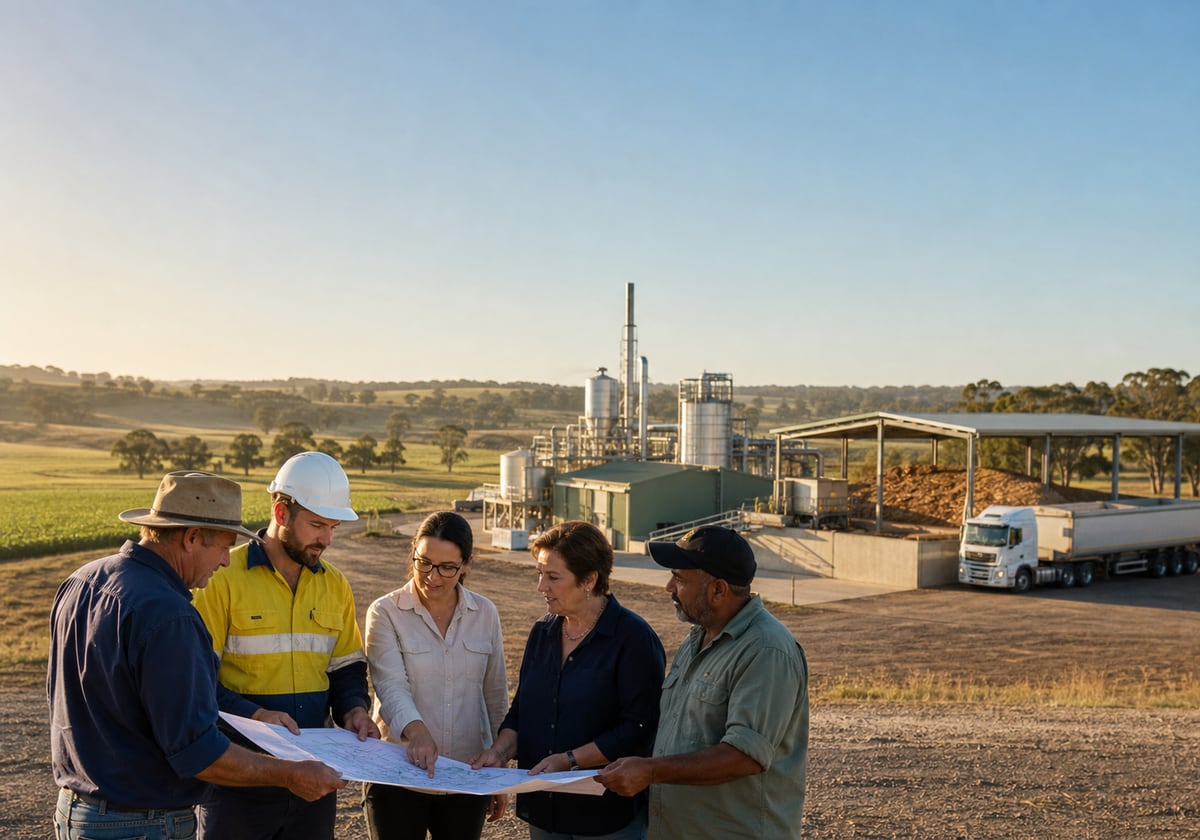
A biomethanol project can create a different relationship with its region from a project that is largely built and then remotely operated.
It needs a continuing supply of suitable, sustainably sourced biomass. That creates work across feedstock collection, preparation, transport and quality control. The plant needs operators, maintenance teams, technical services and local suppliers. Its by-products may support other useful regional activities. A domestic methanol market can connect the project with transport, industry and fuel security.
These benefits are not automatic. Feedstock must be sustainable and commercially realistic. Transport distances must make sense. Jobs and procurement claims must be supported by credible estimates. By-product markets and customers must be developed rather than assumed.
But when the chain is real, local people can see how the project fits into the regional economy. They can see businesses winning work, people building skills and useful products leaving the plant. That direct experience makes the project more resilient when misleading claims circulate, because the community has evidence of its own.
Participation matters as much as benefits
No project should become complacent simply because it expects to create jobs.
Strong social licence depends on how a project behaves as well as what it produces. Early and honest engagement matters. So do clear community benefits and meaningful participation by First Nations people and the wider community.
Community equity can be one way to align interests because it gives local people a direct stake in success. Sunshine has discussed a proposal for community and First Nations participation through project equity.
The principle is straightforward: communities should not be treated only as hosts. They should have a fair opportunity to participate in the value created in their region.
A stronger project and a fairer transition
Regional value is sometimes described as an additional benefit, separate from the main commercial case. That understates its importance.
For a green fuels project, the local supply chain, workforce, customer links and community relationships are part of the project itself. They can improve practical delivery, strengthen trust and reduce the risk of community rejection. They also help answer a larger question about the energy transition: will regional Australia merely provide the sites and resources, or will it share in the opportunity?
A successful biomethanol project should do more than produce a lower emissions fuel. It should help build regional capability, improve fuel resilience and create value that local people can see and share.
That is how a green fuels project earns trust, and how the transition becomes stronger because of the regions at its centre.