Digital infrastructure needs real-time reliability
Data centres are changing the electricity conversation. They are large, energy-intensive, and increasingly important to the economy. Cloud computing, artificial intelligence, financial systems, communications, health data, logistics, and everyday digital services all depend on infrastructure that cannot casually pause when electricity supply is inconvenient.
The scale of the shift is now official. In its 2026 Integrated System Plan, AEMO treats data centres for the first time as one of the defining drivers of Australia's future transmission, generation and system planning, within a forecast near-doubling of electricity consumption across the National Electricity Market by 2050. There is real uncertainty about how much of the announced demand will materialise, but the planning direction is clear.
That creates a difficult clean energy challenge.
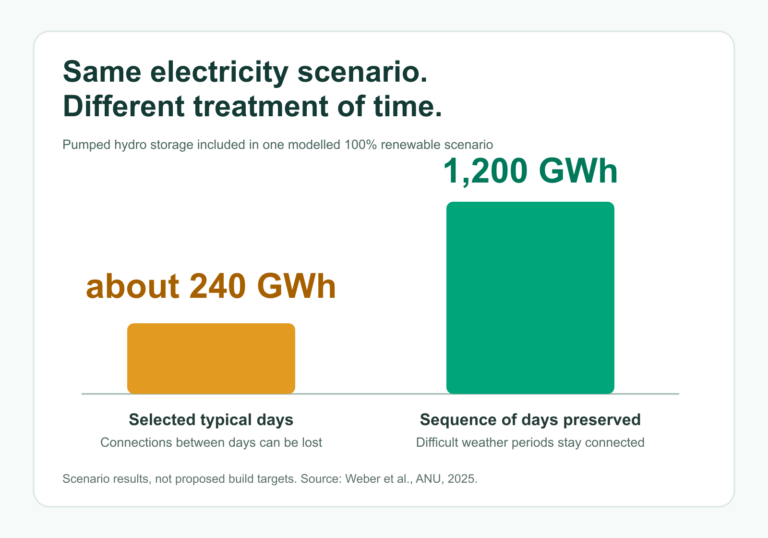
A data centre can buy renewable energy over a year and still need electricity every hour. Annual matching is useful, but servers do not run on annual averages. They need power during evening peaks, cloudy weeks, low-wind periods, heatwaves, and grid stress.
This is why 24/7 carbon-free energy matters. The standard asks whether clean supply can match real demand, not simply whether total renewable procurement balances total consumption over a year.
For data centres, the commercial requirements are clear. They need reliability, price stability, credible emissions performance, grid access, and long-term confidence. They also need community legitimacy, because large energy loads can create public concern if they appear to compete with local needs or increase pressure on the grid.
Sunshine's Superhybrid model speaks directly to this problem. Renewable generation provides clean energy. Long-duration storage helps cover periods when renewable output is low. Flexible fuel production can use surplus renewable electricity and reduce demand when power is needed elsewhere. AESOP, Sunshine's energy-optimisation software layer, can help optimise dispatch and contract delivery.
The result is a cleaner supply model that behaves more like infrastructure-grade power.
Data centres are not the only customers with this need. Mines, smelters, cold storage, water utilities, hospitals, and some manufacturing operations also need dependable power. But data centres make the issue visible because their growth is so rapid and their reliability requirements are unforgiving.
This does not mean every data centre should be supplied by the same project model. It means the conversation must move beyond annual claims. The future standard will increasingly ask how clean power is supplied in real time.
The energy transition will be judged not only by the amount of renewable energy installed, but by whether clean electricity can serve the customers that keep the economy running.
Data centres do not run on averages. Clean energy systems should not be designed as if they do.