How Green Hydrogen Helps Biomass Go Further
Starting with biomethanol creates a disciplined staged investment pathway.
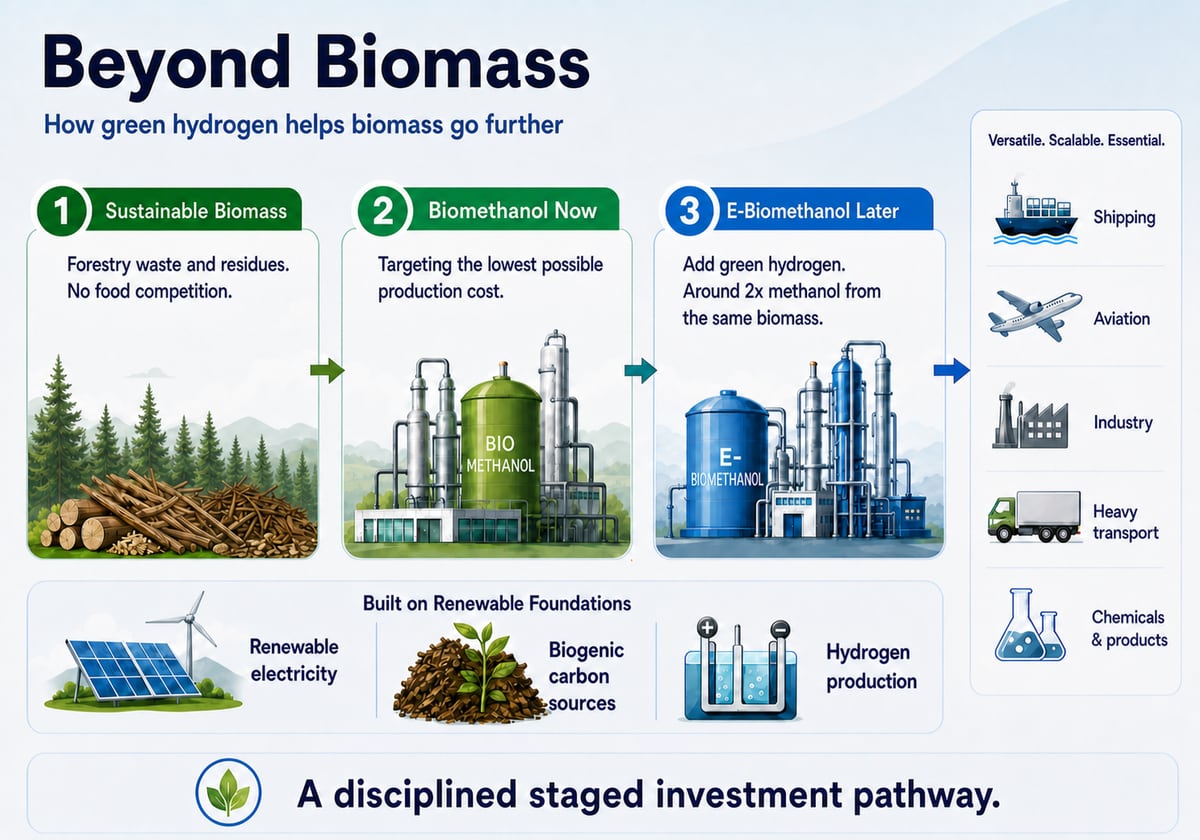
Biomethanol is a practical starting point for producing cleaner fuel, targeting the lowest possible cost of production.
It can be made from sustainable biomass such as forestry residues, agricultural waste and other organic material. The technology is available now, and it can begin replacing methanol made from fossil fuels.
But sustainable biomass is limited. It is also needed for other purposes, including heat, power and construction materials. If renewable methanol is to grow, we must make the best possible use of every tonne of biomass available.
Not All the Carbon Becomes Methanol
When biomass is converted into biomethanol, not all of its carbon ends up in the final product.
Some becomes carbon dioxide during production. This is biogenic carbon: carbon that was recently absorbed from the atmosphere as plants grew.
At our SA Green Fuels project, this CO2 will be better utilised. It will be liquefied and used to replace fossil-based CO2 that is currently hauled from Victoria. The first plant can produce more renewable CO2 than the amount of fossil-based CO2 currently used in South Australia.
That creates an opportunity for the future.
Adding Renewable Hydrogen in the Future
Renewable electricity can be used to split water and produce green hydrogen.
When this hydrogen is added to the biomethanol production process, it can combine with the biogenic CO2 produced by the plant. Together, they produce additional methanol, which we call E-biomethanol.
The result is significant: we can produce around twice as much methanol from the same amount of biomass.
The additional methanol does not appear from nowhere. The extra energy comes from renewable electricity, carried in the hydrogen. The biomass provides the renewable carbon.
This allows us to better utilise the carbon already contained in the biomass instead of releasing it as carbon dioxide.
What Does It Cost?
E-biomethanol is currently expected to cost approximately 30 to 40% more to produce than biomethanol, largely because of the high cost of hydrogen made using electrolysis.
That difference should narrow as renewable hydrogen production expands and its costs fall. E-biomethanol therefore offers a way to make better use of a limited renewable resource as its economics improve.
A Practical Path Forward
This creates a sensible development pathway.
We can begin with biomethanol using technology, feedstocks and supply chains that are available today. This establishes production capability, customer demand and the supporting market while targeting the lowest possible cost of production.
As renewable electricity and green hydrogen become more affordable, hydrogen production can be added. Biogenic CO2 that was not incorporated into the first-stage methanol can then be converted into additional E-biomethanol.
This approach helps limited biomass resources go much further. It also allows production to grow without requiring a matching increase in land, forestry residue or agricultural waste.
From Today's Solution to Tomorrow's Scale
Biomethanol and E-biomethanol are not competing choices.
Biomethanol is the practical first step. It can begin reducing dependence on fossil methanol now.
E-biomethanol is the next step. Renewable hydrogen allows more of the biogenic carbon from the same production system to be converted into methanol.
That is how biomethanol creates the foundation for a larger renewable methanol industry: start with what is practical and economical today, then use renewable energy to make every tonne of biomass work harder.